How-to · Space
How to Organize Under a Sink Around Pipes
The cabinet is not one rectangle. The usable space is whatever is left beside the trap and the valves.
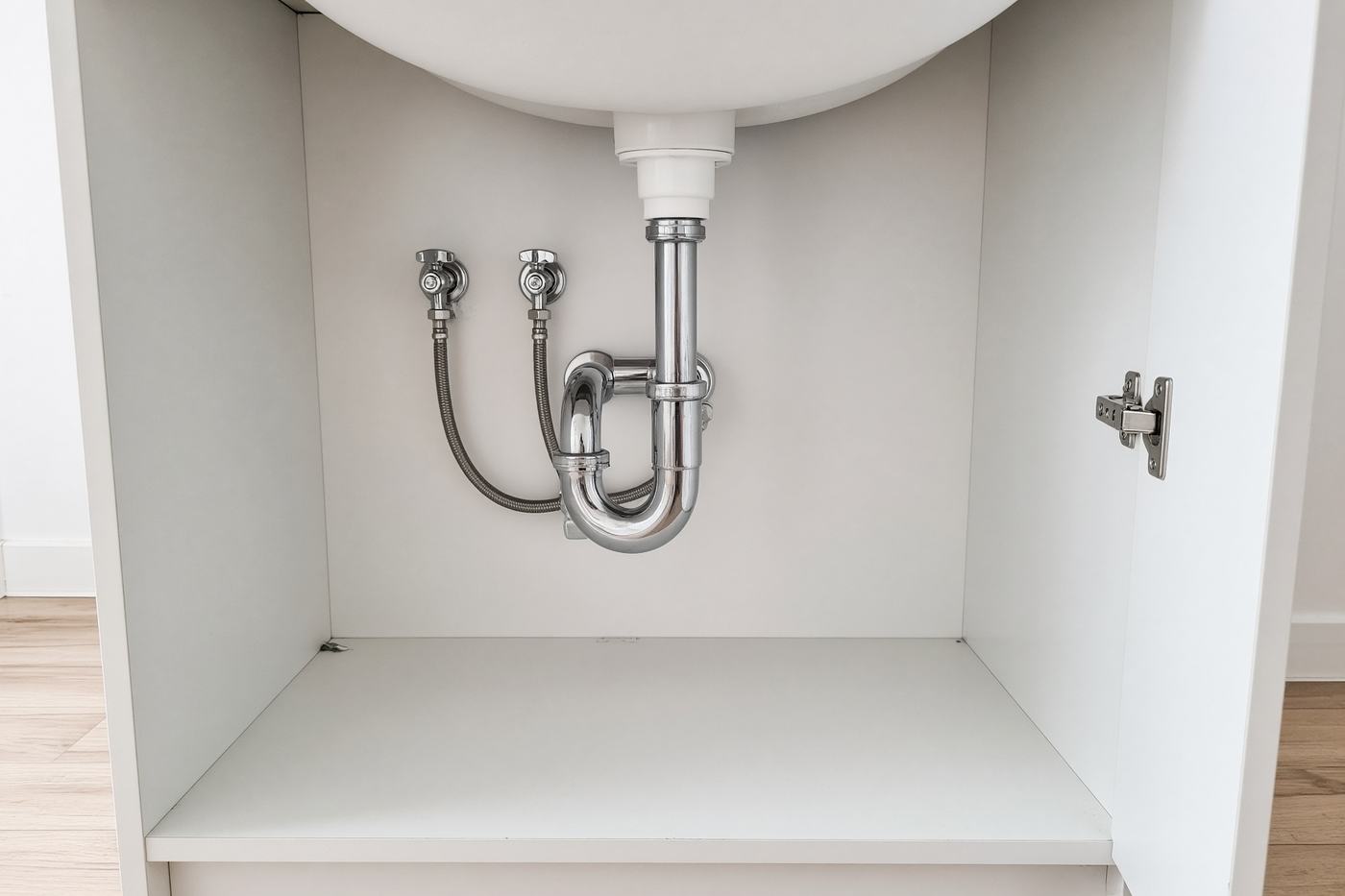
Quick method: Empty the cabinet, measure the open floor on each side of the pipes, and only then put bottles back. Do not build a shelf in front of a shutoff.
Clear sides, or a cabinet you have to unpack
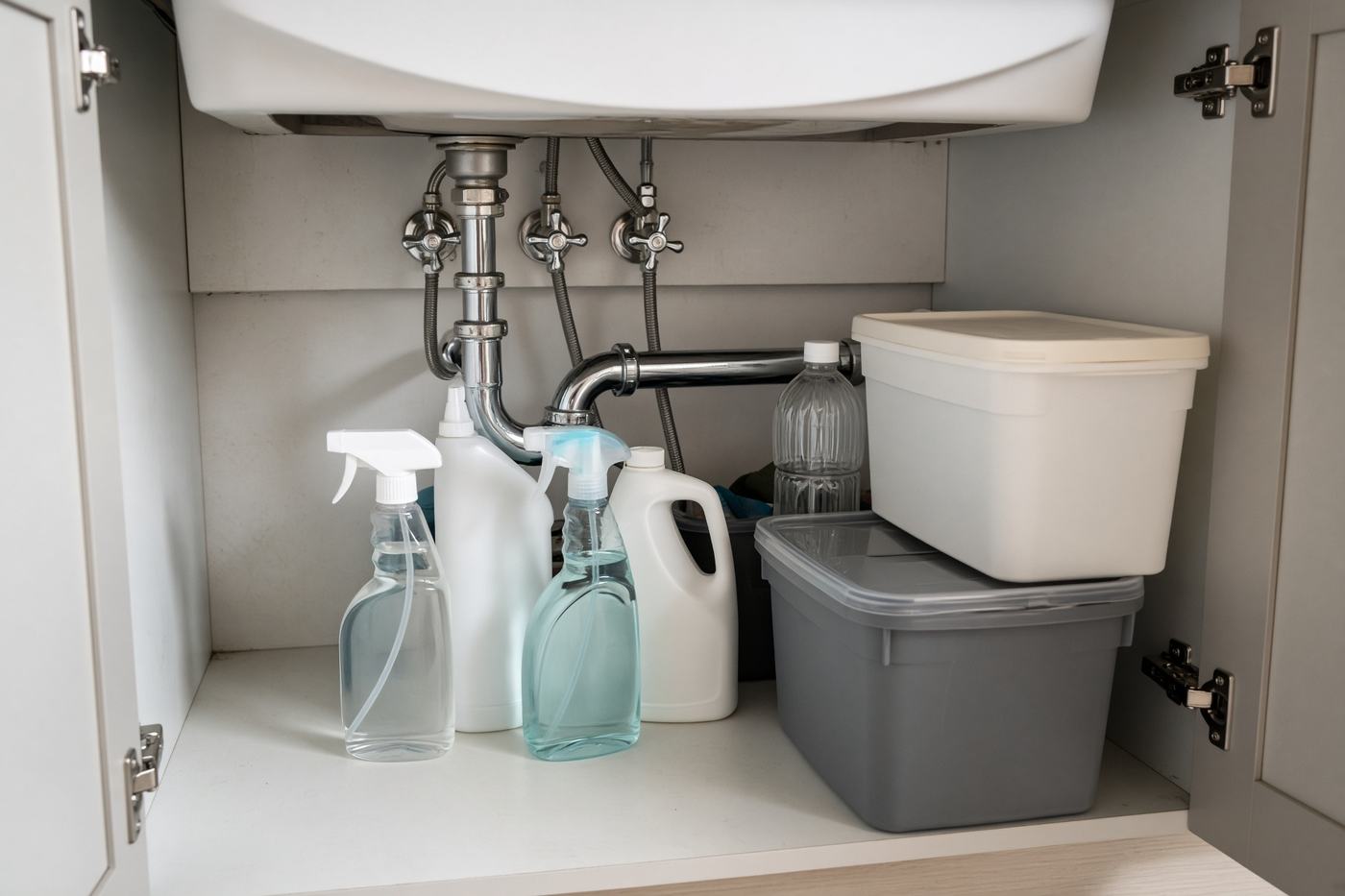
Step by step
- Take everything out. Wipe the floor and look for a drip under the trap before you put a bin on top of it.
- Measure the open floor on the left and the right, from the side wall to the nearest pipe. Also note the height under the trap and whether the door hinge swings into that space.
- Leave the center open. The trap and the shutoffs are the service path.
- Put tall bottles only in a side that stays clear when the door closes. If a bin hits the hinge, it does not fit.
- Keep small items in a bin you can lift out. Do not screw a shelf across the valves.
What not to do
Do not drill the cabinet floor or the back wall to force a rack around a pipe. Do not cover an active drip with a mat and keep stacking. If the only open space is directly in front of a shutoff, that space stays empty.
When you already know the width of each side, the under-sink size guide is the next page. It is about the opening, not about filling the cabinet.
Related guides
Illustrations explain the problem. They are not product tests.